
News
With Feng Shui & Buddhist wisdom, explore jewelry energy, share ways to gather energy and bring daily good fortune.
on Sep 10 2025
1
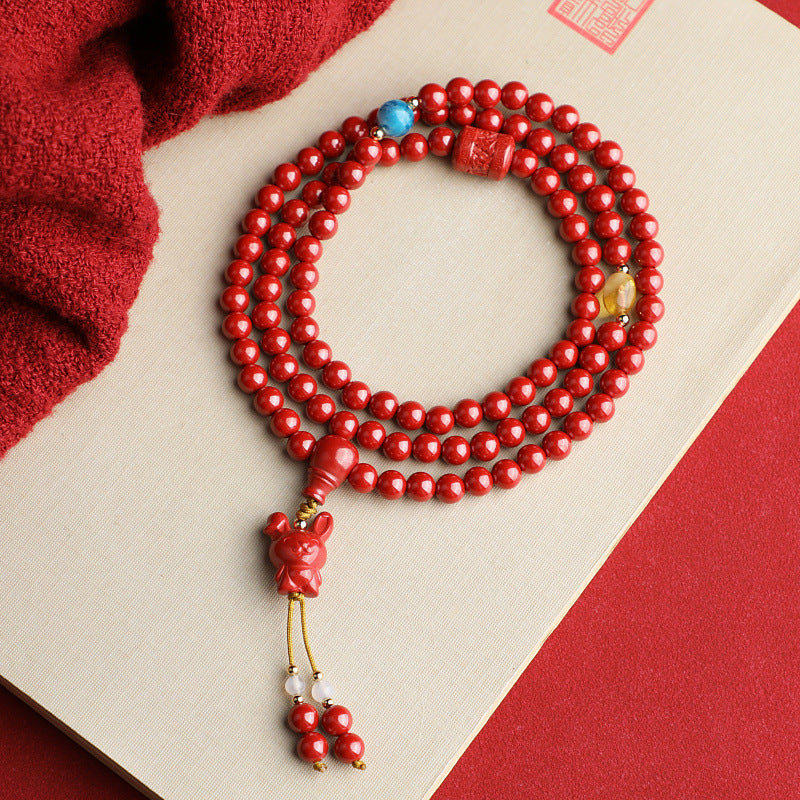
Imperial Cinnabar is a premium form of natural cinnabar, created by compressing fine cinnabar powder at high temperatures. The result is a gemstone with a glossy, luminous surface that shimmers like golden stars ✨, glowing with a deep vermilion hue — bold, regal, and full of life.
The name “Imperial” originates from ancient China, where emperors revered cinnabar for its sacred energy and royal symbolism. It was used to write imperial decrees 📜 and craft ceremonial artifacts, representing authority, vitality, and divine favor.
🌟 Symbolic Meanings & Spiritual Energy
👑 Nobility & Power — The word “Imperial” connects it to royal authority, symbolizing supreme strength, dignity, and sovereignty.
🧿 Protection from Negative Energy — In Chinese tradition, cinnabar embodies strong yang energy, believed to ward off evil and safeguard the spirit. Imperial Cinnabar, being the highest grade, is said to amplify this protective force.
💫 Energy & Harmony — It helps stabilize your aura, enhance vitality, and bring balance between body and mind, promoting calm focus and inner peace.
🍀 Good Fortune & Joy — Its radiant red hue represents luck, prosperity, and happiness, echoing the ancient belief that red attracts auspicious energy.
🌹 Where Beauty Meets Tradition
Imperial Cinnabar is often crafted into bracelets, pendants, or spiritual ornaments, blending artistic beauty with deep cultural meaning.It serves as a bridge between ancient wisdom and modern life, carrying both elegance and protective power — a perfect balance of style and soul. 🌸✨
The Complete Guide to Wearing Pixiu: Cultural Wisdom & Practical Tips for Wealth & Protection
on Sep 08 2025
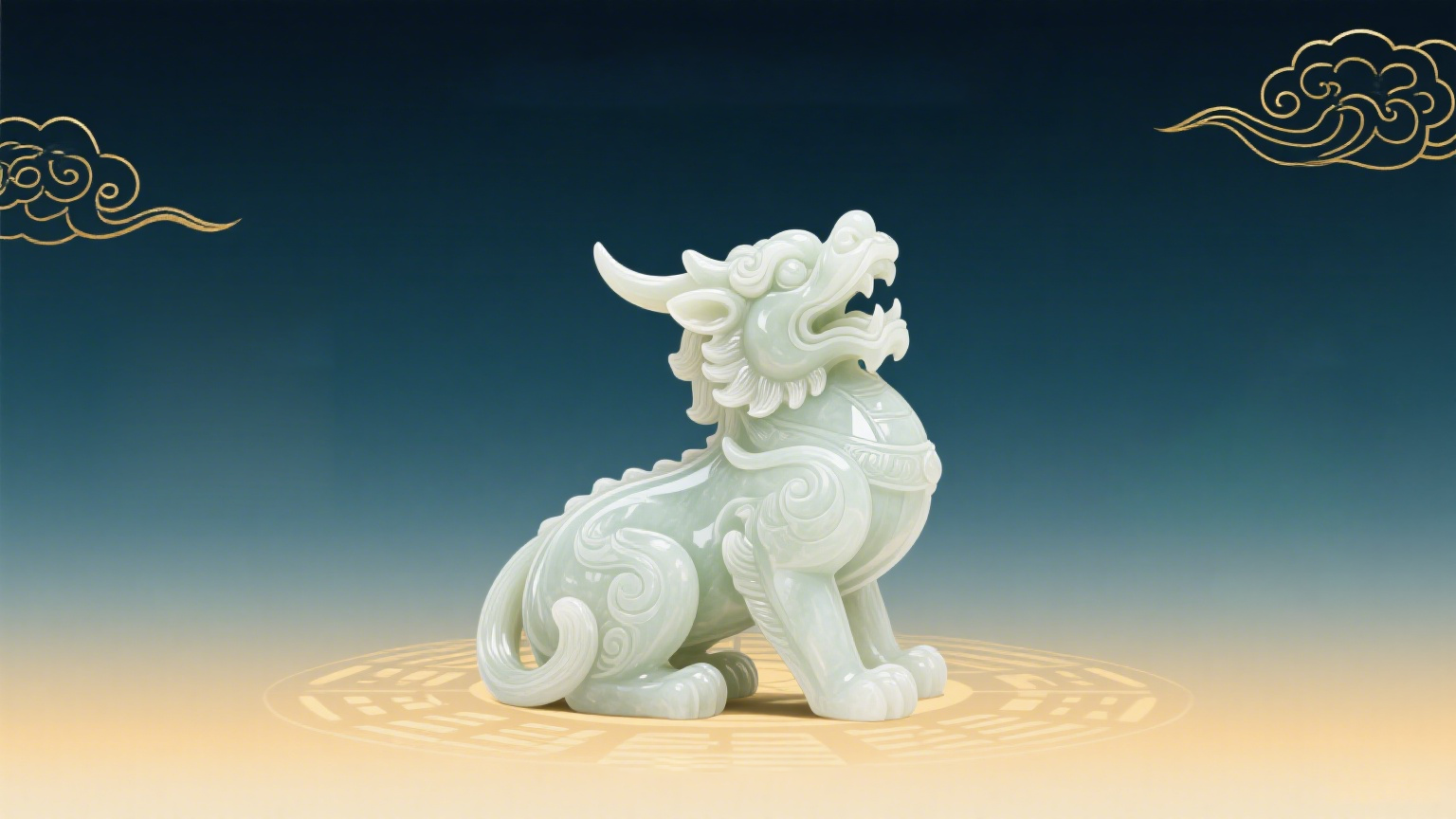
In the vast starry sky of traditional Chinese culture, Pixiu shines as a brilliant star of wealth and guardianship. This legendary auspicious beast carries ancient aspirations for prosperity while embodying unique wisdom about wearing and maintenance. Let's uncover the mystery of Pixiu and explore its cultural significance and practical guidance.
📜 Origin & Symbolism: The Legend of Swallowing Wealth
Pixiu (also known as "Pi Xiu" or "Bixie") combines features of various mythical creatures - dragon's head, lion's body, occasionally with wings or antlers, both majestic and mysterious.
The most famous legend tells how Pixiu made a mistake in the Heavenly Court and was sealed at the anus. Since then, it can only swallow gold, silver, and jewels but cannot excrete them, becoming the ultimate symbol of wealth that "only enters but never leaves."
Another legend describes it as the son of the Dragon King or an assistant to Tai Sui (God of Jupiter), capable of resolving misfortunes caused by offending Tai Sui. These stories give Pixiu three core meanings:
Wealth Attraction: Actively draws wealth from all directions
Wealth Protection: Guards existing assets from loss
Evil Ward-off: Resists negative energy and misfortune
💍 How to Wear Pixiu Jewelry Correctly
📿 Pixiu Bracelet: Left Hand for Wealth, Facing Outward
Wear your Pixiu bracelet on the left hand, following the feng shui principle of "left to receive, right to release." The left hand is considered the "entrance" for positive energy, enhancing wealth absorption. The Pixiu's head should face outward (toward your little finger), symbolizing its active pursuit of surrounding fortune.
💍 Pixiu Ring: Middle Finger for Wealth Accumulation
Wearing on the middle finger aligns with palmistry's belief that "the middle finger governs wealth." A Pixiu ring strengthens financial focus and supports career advancement.
📿 Pixiu Pendant/Necklace: Head Up to Receive Heaven's Blessings
The Pixiu's head must face upward, implying "receiving heavenly fortune." Legend says Pixiu travels between heaven and earth, and this positioning symbolizes divine protection with dual functions of safeguarding and wealth attraction.
⚖️ Male vs. Female Pixiu: Balancing Energy
In feng shui culture, Pixiu has gender distinctions with different functions:
Male (Tianlu): Single horn, excels at "seeking wealth," actively hunts for treasures - ideal for those expanding financial resources
Female (Bixie): Double horns, focuses on "guarding wealth," protects existing assets and resolves negative energy - perfect for preventing financial loss
Some jewelry features both male and female Pixiu for balanced "wealth attraction + protection" effects.
⚠️ Taboos & Maintenance: Keeping the Auspicious Energy
Wearing Taboos
Avoid wearing in "unclean places" like bathrooms
Remove while sleeping to maintain pure energy
Never let others touch, especially the eyes and mouth (these are its "tools" for seeking wealth)
Daily Care
Wipe regularly with soft cloth to keep clean
Occasionally "feed" by placing with coins or crystals
Gently touch its body (avoiding eyes/mouth) to build connection
Damage Handling
If your Pixiu jewelry breaks, tradition says it has taken on misfortune for you. Wrap it in red cloth and bury it deeply to show gratitude and respect - never discard casually.
👥 Who Should Wear Pixiu? Energy Compatibility
Pixiu has strong energy that's not suitable for everyone:
Ideal Wearers: Those seeking financial improvement, career breakthroughs, or protection from negative energy
Cautious Wearers: Elderly, pregnant women, or those with weak energy should strengthen themselves through regular routine and exercise before wearing
💎 Material Matters: Energy Enhancement
Different materials carry different energy attributes:
Metal (Gold/Silver): Enhances wealth attraction, corresponds to "Heaven" trigram
Obsidian: Strengthens evil-warding ability, ideal for stressful environments
Jade (Jadeite/Hetian Jade): Gentle energy balances Pixiu's strong aura, suitable for mind-body harmony
Choose based on your needs: metal for wealth seeking, obsidian for protection, jade for balance.
🌿 Conclusion: Sincerity Brings Blessings
Pixiu is more than a symbol of wealth; it is a spiritual guardian of ancient wisdom. By connecting with it through genuine reverence and a sincere heart, you align your energy with its power, allowing abundance and good fortune to flow into your life like an endless, gentle stream.

on Sep 02 2025
I’d like to share a supreme Taoist mindset. The original text is as follows:
财少多布施 — 当财富有限,多行布施。
体弱多放生 — 身体虚弱时,多救助生命。
心乱多静坐 — 心绪不宁时,多静坐冥想。
深夜多念道 — 夜深人静时,多诵念道经。
福薄多行善 — 福气不多时,多行善事。
惠浅多读书 — 悟性不高时,多读书增长智慧。
不顺多尽孝 — 做事不顺时,多尽孝道。
家兴要勤俭 — 家庭兴旺时,要勤俭节约。
人旺少杀生 — 人丁兴旺时,要珍惜生命、少杀生。
I’ve translated the text above into English — please leave a comment if anything is incorrect. Thank you!
When wealth is limited — give more and practice generosity.
When your body feels weak — protect and help all living beings.
When your mind is restless — sit in stillness and meditate.
When the night grows deep — recite the Tao and connect with the Source.
When your blessings feel few — do more good deeds and spread kindness.
When your understanding feels shallow — read and learn with sincerity.
When things don’t go smoothly — honor and care for your parents.
When your family prospers — stay humble and live simply.
When your lineage flourishes — cherish all life and avoid harming any being.
on Aug 14 2025
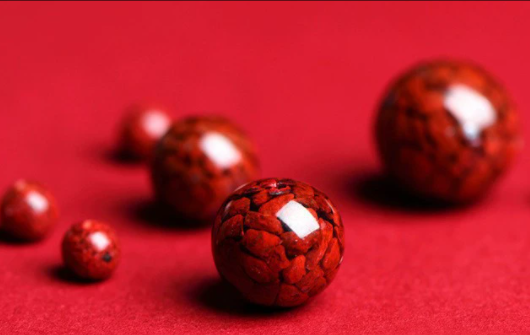
Crystal Cinnabar is a rare and captivating form of cinnabar, sometimes containing trace amounts of naturally associated minerals. This unique composition enhances both its aesthetic brilliance and energetic depth. ✨
🌈 Appearance
Its color glows as vividly as pigeon blood red ❤️, radiating warmth and vitality. Under the light, the raw mineral sparkles with crystalline flashes 💫, its sheen reminiscent of fine mica reflections. When illuminated, the crystal becomes translucent and luminous, revealing a fish-scale-like metallic shimmer — breathtakingly beautiful and full of life force. 🌟
🪶 Texture & Formation
Because of its naturally formed crystal structure, Crystal Cinnabar is delicate and brittle. Each piece requires meticulous care during mining and crafting 🔨, as its fragile beauty can easily fracture under pressure — a true embodiment of strength within fragility, much like the balance of yin and yang. ☯️
🌺 Symbolic Meaning
Crystal Cinnabar is treasured not only for its visual splendor but also for its spiritual resonance.It symbolizes clarity, transformation, and renewal, helping the wearer channel positive energy, dispel negativity, and enhance inner vitality. 🍀Its radiant light is believed to illuminate one’s spirit, encouraging emotional balance, confidence, and calm focus. 🌞
✨ Elegant. Spiritual. Empowering.#CrystalCinnabar #HealingEnergy #SpiritualGemstone #PositiveVibes #LuxuryJewelry #MindBodyHarmony
Who is suitable for wearing crystal cinnabar jewelry
Collectors who appreciate the beauty of natural crystalsCrystal cinnabar boasts a vivid "pigeon blood" color, sparkling luster, and translucent texture. Its uniquely natural crystal structure, formed by nature, has high ornamental and collectible value, making it ideal for collectors who pursue the natural beauty of ores and are passionate about collecting rare crystal jewelry.
Fashion enthusiasts who value uniqueness in accessoriesThe fish-scale-like metallic sheen of crystal cinnabar and its transparency when lit give it high 辨识度. Its designs are often one-of-a-kind due to its natural form, suitable for fashion lovers who like to showcase their taste with niche and personalized accessories.
People who can carefully maintain jewelrySince crystal cinnabar is relatively brittle and prone to breaking due to impact or improper handling, it is suitable for those who are careful in daily life and can properly protect the jewelry (e.g., avoiding wearing it during strenuous exercise, storing it separately).
Cultural enthusiasts who admire the spirituality of natural creationsAs a naturally formed crystal, crystal cinnabar is endowed with symbolic "spirituality" in some cultures. It suits people who believe in natural energy and enjoy finding psychological resonance in natural ores.

The Five Elements in Ancient China_ Origin and Historical Overview
on Aug 06 2025
The ancient Chinese theory of the Five Elements (metal, wood, water, fire, earth) originated from Shangshu·Hongfan (c. 11th century BCE), initially referring to five basic substances with distinct properties: water moistens and flows downward, fire blazes upward, wood bends and straightens, metal yields and transforms, and earth nurtures crops. By the late Western Zhou Dynasty, Shi Bo proposed "harmony generates all things," linking the Five Elements to the creation of all beings. During the Spring and Autumn Period, Zuo Zhuan and Mo Jing explored the mutual restriction among the Five Elements, transforming them from material classification to a dynamic philosophical system.
Zou Yan, a Yin-Yang scholar of the Warring States Period, created the "theory of the five virtues' succession," explaining dynastic changes through the mutual conquest of the Five Elements. This was adopted by Emperor Qin Shi Huang as a governing principle (the Qin Dynasty was associated with water virtue). In the Western Han Dynasty, Dong Zhongshu put forward the theory of mutual generation of the Five Elements in Chunqiu Fanlu, integrating them with seasons, directions, and ethics to construct a "heaven-human induction" system, using natural anomalies to warn rulers of moral conduct. Scholars like Zhou Dunyi and Zhu Xi in the Song Dynasty further deepened the theory, incorporating the Five Elements into the cosmic generation framework of "Taiji → Yin-Yang → all things."
The Five Elements theory permeated various social fields: Traditional Chinese Medicine's Huangdi Neijing correlated the Five Elements with the five zang-organs (liver-wood, heart-fire, spleen-earth, lung-metal, kidney-water) to guide diagnosis and treatment; in astronomy and calendars, the Five Elements matched seasons and directions, influencing political arrangements; in architecture and feng shui, balance of the Five Elements determined site selection and materials, such as the black tiles (symbolizing water) of Wenyuange in the Forbidden City to prevent fire.
Historical allusions include Gun's failure in flood control due to "disturbing the Five Elements" and Yu's success by following water's nature, metaphorizing the importance of conforming to natural laws; Zou Yan's prophecy of "water replacing fire" provided legitimacy for the Qin Dynasty, yet the dynasty's excessive harshness (abusing water virtue) led to its rapid downfall; Dong Zhongshu's use of natural disasters to admonish Emperor Wu of Han demonstrated the political function of the Five Elements theory.
Evolving from material observation to a ideological system encompassing nature, society, and ethics, this theory became a cornerstone of traditional Chinese culture.

Meanings and Stories of Red Strings in Bracelets
on Jul 30 2025
Red strings in traditional Chinese culture carry rich auspicious meanings. They symbolize good luck and protection. People believe red strings can ward off bad fortune and bring safety. Especially in the "ben ming nian" (a special year related to one's zodiac sign), wearing a red string bracelet is a common custom, meant to ease misfortunes believed to come with this year.
Red strings are also closely linked to romantic ties. The most well-known legend is "Yue lao's red string": it's said that the Moon Old Man, who governs human relationships, uses an invisible red string to tie the ankles of men and women destined to be together. No matter how far apart they are, they will eventually meet and stay with each other. Thus, couples wearing red string bracelets often see it as a symbol of "eternal devotion."
Moreover, red strings represent the bond of family and friendship. When family members or friends give each other red string bracelets, it signifies care and blessings, symbolizing that their affection is as strong and unbroken as the red string.
These meanings and stories, though simple, embody people's yearning for a good life, making red strings a cultural symbol that transcends time.
For Love and Health:
For Wealth:
For lucky:
For Protection: